What Are HTML5 Games and Why Do They Run Everywhere?
HTML5 games run in the browser you already have. Here is how they work and what that means for you as a player.
Most games hide how well you are doing behind points and levels. Skill games are more direct. They test one ability, give you a plain number and invite you to do better next time. Here are five from our Skill Games and Educational categories, with a note on what each one measures.
Reflex Test waits a random moment, turns green, and times how long you take to respond, in milliseconds, averaged over five rounds. For most people a simple visual reaction falls somewhere around a fifth to a quarter of a second, and it varies with tiredness, time of day and the device in your hand. Compare yourself with yourself, on the same device.
Odd Color shows a grid of tiles in which one is a slightly different shade. Each round the difference gets smaller. It is a test of looking rather than of speed: sweep the grid once, calmly, instead of darting about.
Color Echo lights a pattern of pads that grows by one step each round. Saying the sequence under your breath, or grouping it into threes, usually adds a few rounds. Number Memory does the same with digits: a number flashes up, disappears, and comes back one digit longer each time you get it right. Splitting it into chunks, as you would a phone number, helps here too.
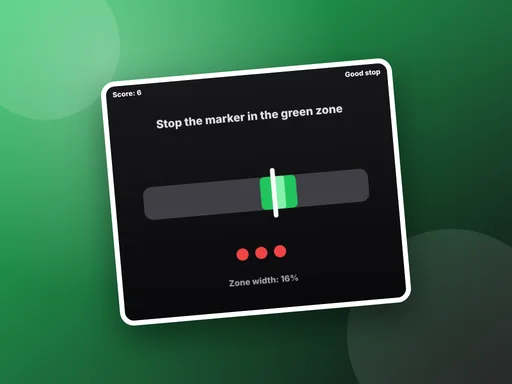
Precision Stop is about anticipation. The marker moves at a steady speed, so the skill is not reacting when it arrives but predicting when it will.
HTML5 games run in the browser you already have. Here is how they work and what that means for you as a player.
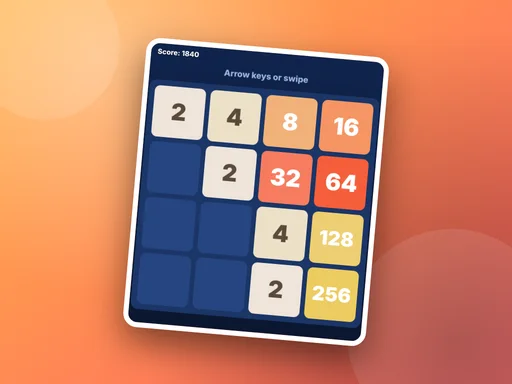
Stuck around the 256 or 512 tile? These five habits make a real difference in merge puzzles like Tile Fusion.
The same browser game can feel very different on a phone and on a desktop. Here is how to match the game to the device.