What Are HTML5 Games and Why Do They Run Everywhere?
HTML5 games run in the browser you already have. Here is how they work and what that means for you as a player.
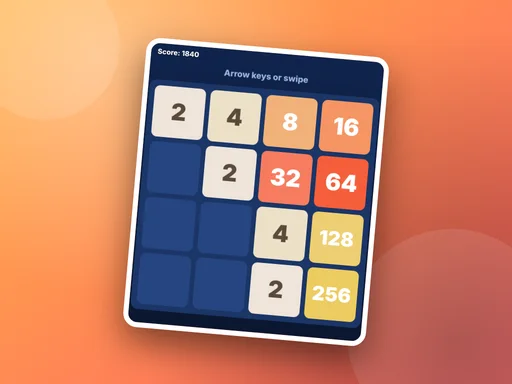
Merge puzzles such as Tile Fusion look like games of luck at first. They are not. A few simple habits will take most players well past the point where they usually get stuck.
Choose one corner for your largest tile and keep it there. A big tile in the middle of the board gets in the way of everything else.
If your corner is bottom-left, play mainly down and left. Use the third direction when you must, and avoid the fourth unless there is no other move, because it pulls your biggest tile out of its corner.
Arrange the row next to your corner in descending order: 256, 128, 64, 32. When the small end of the chain merges, the whole row can collapse into the corner in a few moves.
Small tiles scattered between large ones are what end most games. Before each move, check whether it will trap a 2 or a 4 somewhere awkward.
There is no timer. When only three or four spaces are left, stop and look at every possible move before you swipe.
None of this guarantees the 2048 tile every time, but together these habits make reaching it far more likely.
HTML5 games run in the browser you already have. Here is how they work and what that means for you as a player.
The same browser game can feel very different on a phone and on a desktop. Here is how to match the game to the device.
No second device, no accounts, no waiting for a download. These five games let two people play on the same laptop, tablet or phone.