What Are HTML5 Games and Why Do They Run Everywhere?
HTML5 games run in the browser you already have. Here is how they work and what that means for you as a player.
Logic puzzles have a reputation for being difficult, but the good ones are simply honest: everything you need is on the screen, and nothing depends on luck or speed. If you are new to them, these five HTML5 games make a good ladder from easy to demanding.
Sudoku Mini uses a four-by-four grid and the numbers 1 to 4. The rule is the same as the full-size puzzle — no repeats in any row, column or box — but a game takes about a minute. It is the best way to learn the basic move of all sudoku: find the square where only one number can still go.
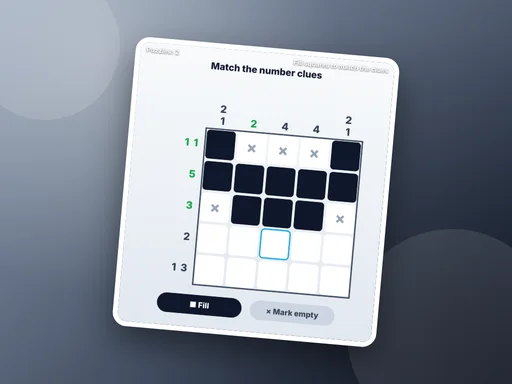
In Pixel Logic the clues are numbers beside each row and column, describing runs of filled squares. Start with the lines that leave no choice, such as a 5 in a five-square row, and mark the squares you know are empty. Each certain square makes the next one easier.
Lights Out looks simple: press a tile and it flips along with its four neighbours. Two facts help. Pressing the same tile twice undoes itself, and the order in which you press tiles does not matter. So the puzzle is really about which tiles to press, not when.
Tower of Hanoi teaches thinking backwards. To move the biggest disc, everything above it must first be parked on the spare peg — and that is the same puzzle again, one disc smaller. Once you see the pattern, the moves almost choose themselves.
Eight Queens asks you to place eight chess queens so that none attacks another. There is no trick; it rewards patient trial, noticing why a position fails, and changing one thing at a time.
Look for what must be true before you try what might be true. Guessing feels faster, but a wrong guess in a logic puzzle hides itself until much later. When you are stuck, the answer is nearly always a forced move you have not spotted yet. You will find all of these and more in the Puzzle and Strategy categories.
HTML5 games run in the browser you already have. Here is how they work and what that means for you as a player.
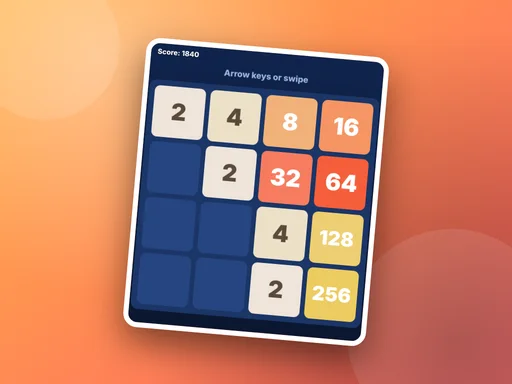
Stuck around the 256 or 512 tile? These five habits make a real difference in merge puzzles like Tile Fusion.
The same browser game can feel very different on a phone and on a desktop. Here is how to match the game to the device.